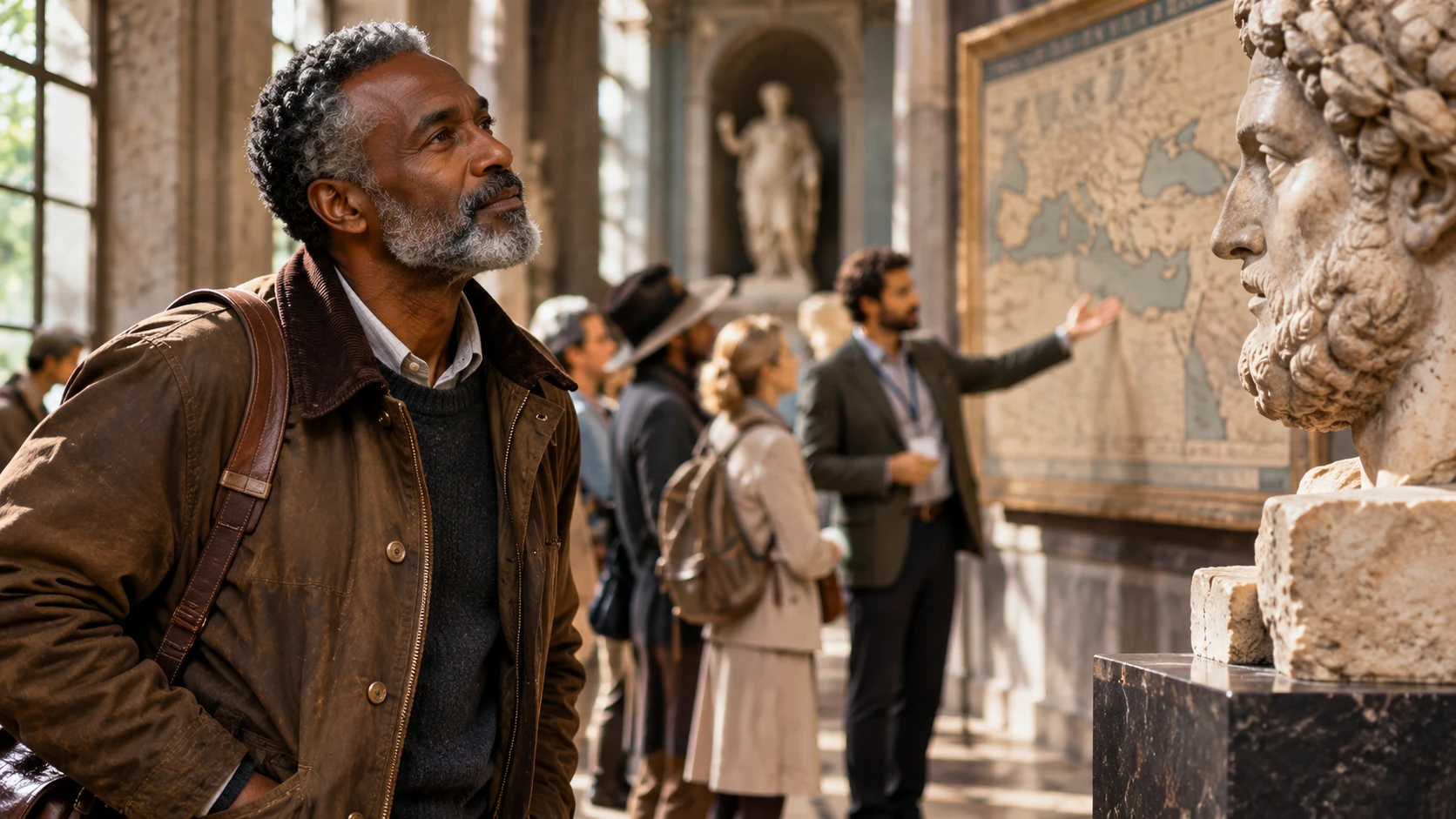
It is possible to travel thousands of miles and see very little. A man can collect photographs, tick off monuments and return home with scarcely a new thought about the people whose country he has visited. Curiosity asks more of him. It requires time to notice ordinary life, the humility to ask a question and the good sense not to treat every difference as a spectacle. The most rewarding visitor is usually the one who arrives with a little knowledge and a willingness to discover that he has much more to learn.
Read enough to recognise what you are seeing
Before departure, learn something about the destination’s history, geography and everyday customs. A short history, a thoughtful travel guide and the website of a local museum can supply useful context. You need not arrive as an expert. You should, however, know more than the name of the hotel and the route from the airport.
When you understand why a street, market or building matters to local people, it becomes more than a backdrop for a photograph. Read different accounts where the history is disputed, and be wary of the traveller who returns with a sweeping judgement after a weekend away.
Leave room for an unplanned discovery
A sensible itinerary prevents a journey from becoming a succession of missed bookings. An overloaded itinerary can be just as limiting. Leave some hours unassigned. Wander through a public garden, visit a small exhibition or sit in a café long enough to notice the rhythm of the place around you.
The best discovery may be something quite ordinary, such as a bookshop, a working harbour, a neighbourhood bakery or a conversation with a local guide. Do not expect a destination to produce memorable experiences on command. Sometimes the pleasure is simply in paying attention.
Ask questions without demanding an audience
People are generally more willing to speak when they feel that the other person is genuinely interested. Ask the guide why a building has been preserved, or the bookseller which local writer might be worth reading. Listen to the answer before preparing the next question. A modest enquiry often leads further than a grand pronouncement.
Remember that nobody is obliged to explain an entire country’s customs to a visitor. A hotel worker has a job to do. A stranger in a market may be busy. Courtesy includes recognising when to leave someone in peace. If a person wishes to speak, treat him as an individual, not as a representative of millions.
Look at what exists outside the famous itinerary
Major museums and celebrated landmarks deserve their reputation, but they do not tell the whole story. Local libraries, public markets, small galleries and ordinary streets often show how a place has changed and how people live in it now. Find out whether a community event welcomes visitors before joining, and comply with whatever rules apply.
Be especially careful around homes, places of worship and working neighbourhoods. They are not attractions maintained for your convenience. Stay on public paths, observe photography restrictions and avoid obstructing the people who must go about their day.
Taste, listen and observe with good manners
An unfamiliar dish or custom is an opportunity to learn, not an invitation to make a show of disgust or superiority. You need not enjoy everything, but you can decline politely and ask sensible questions. A visitor who enters a restaurant only to insist that everything be made exactly as it is at home has missed part of the experience.
Try a few greetings in the local language, and allow the other person to correct your pronunciation. In a museum or performance, put the telephone away when its use would disturb others. A little restraint often allows you to notice more.
Return with observations rather than verdicts
Keep a few notes about what surprised you or changed your mind. Read the book you bought, follow up on the history you encountered and remember the names of people who helped you. These small acts prevent the journey from vanishing into a gallery of photographs.
When speaking about the place afterwards, distinguish what you actually saw from what you have only heard. A single encounter cannot stand for a whole nation. A curious gentleman returns with stories, certainly, but also with questions he did not know to ask before he left.
Travel with your eyes and mind open.
The best visitor does not demand that another place resemble home. He prepares, observes, behaves well and allows an unfamiliar world to teach him something.