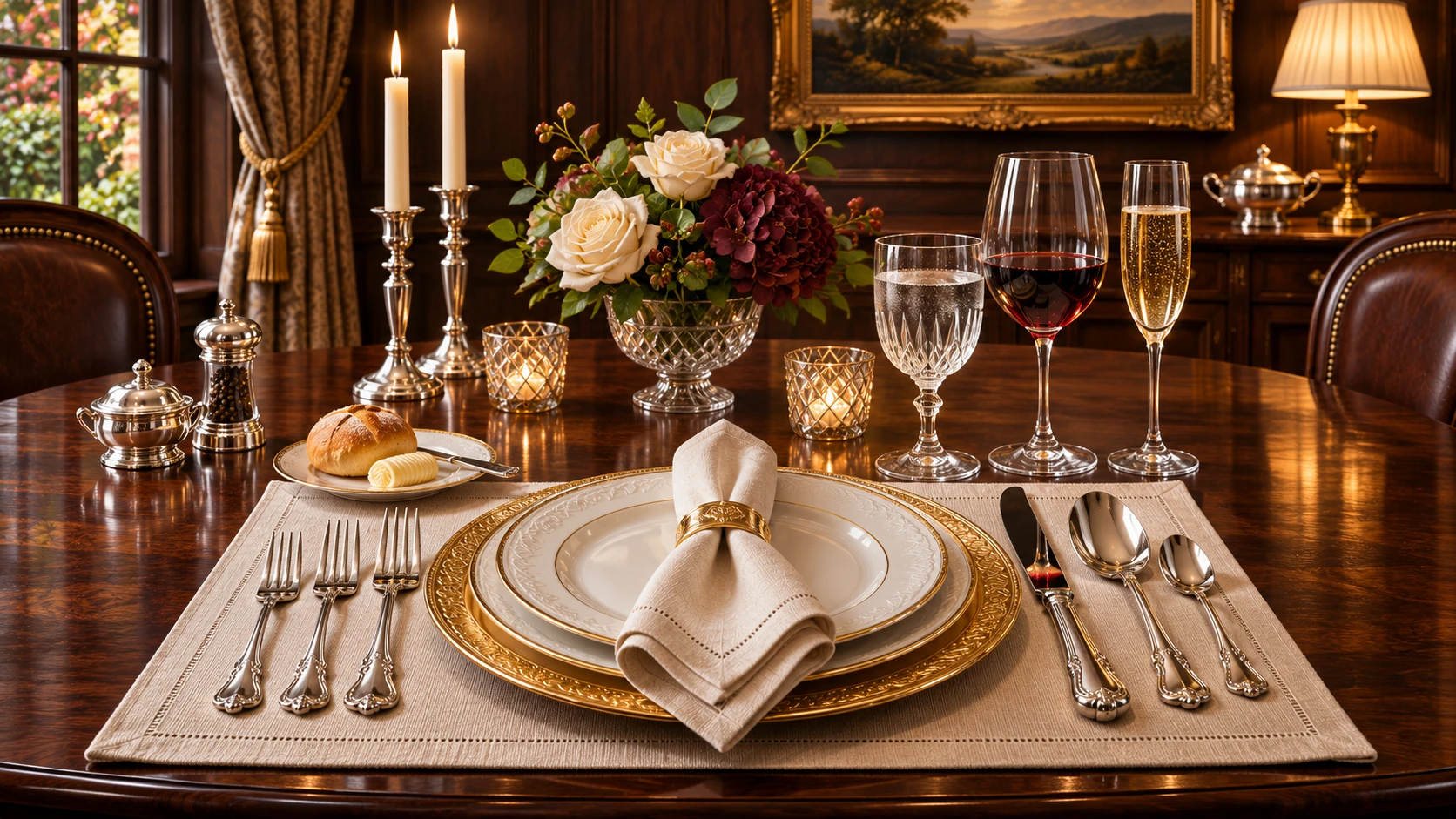
A gentleman should be able to sit down to dinner without consulting a diagram beneath the tablecloth. He should know the essentials of a place setting, speak courteously to staff and understand that good manners exist for the comfort of those around him. Few people will remember his choice of fork. They will remember if he made the evening disagreeable.
Arrive properly, and be ready for the occasion
A formal invitation deserves a prompt reply. If there is a dress code, respect it. Arrive at the stated time unless your host has given a different arrangement, and do not bring another guest without asking. At a restaurant, greet the person who invited you and acknowledge everyone at the table before becoming absorbed in the menu.
Silence your phone and put it away. A man who gives more attention to a screen than to the people across from him has already committed the evening’s most obvious discourtesy. If an urgent call cannot wait, excuse yourself briefly rather than forcing the table to participate.
Understand the place setting
At a formal table, the bread plate is usually to the left and your drinking glass to the right. Cutlery is commonly arranged for use from the outside inward as courses arrive. Place your napkin on your lap after sitting down, and use it discreetly during the meal. These conventions are not an examination. They are a means of allowing everyone to dine comfortably.
If the setting is unfamiliar, wait a moment and observe how the service proceeds. A good host or waiter will guide a guest without embarrassment. The man who loudly corrects another diner’s utensils has committed a greater error than the diner he hopes to educate.

Eat neatly and at a considerate pace
Sit upright without stiffness. Take manageable mouthfuls, chew with your mouth closed and finish before speaking. Avoid reaching across another person. Ask for something to be passed. Keep your elbows off the table while eating, though resting them lightly during relaxed conversation between courses is generally acceptable.
In the British or Continental style, the fork is ordinarily held in the left hand and the knife in the right during the main course. Other dining traditions differ. A gentleman knows the convention of the occasion and does not turn one familiar method into a declaration of superiority. The point is control, cleanliness and ease.
Order with judgement and treat staff well
If someone has invited you as their guest, read the occasion before ordering an extravagantly priced dish. Do not treat the person paying as an open account. Ask clear questions about the menu when necessary, and mention dietary requirements quietly and early enough to be accommodated. Genuine medical or dietary needs should be respected, not made into a topic of debate.
A server deserves the same courtesy as any guest. Say please and thank you. If an order is wrong, explain the problem calmly and allow it to be put right. Mistakes happen. Turning a minor inconvenience into a public humiliation tells the table more about your character than your knowledge of etiquette.
Conversation is part of the meal
A dinner table is not a podium. Speak to the people seated near you, draw quieter guests into the conversation without interrogating them, and listen to the answers. Avoid private jokes that exclude someone. Leave prolonged arguments and personal disputes for another occasion.
A host may wish to propose a toast, which should be brief and appropriate to the gathering. If you do not know a custom, follow the host’s lead. Etiquette asks a man to be observant, not theatrical. Good conversation has a rhythm made of remarks, questions, answers and room for someone else to contribute.
Finish well
When finished with a course, place your cutlery together on the plate rather than leaving it scattered. Do not stack plates for the staff unless invited to help. At a private dinner, wait for the host to signal the meal’s conclusion and offer help in a way that does not interfere with their arrangements.
Thank the host sincerely. At a restaurant, acknowledge the person who organised the meal. At someone’s home, send a short note or message the next day. A pleasant dinner is not measured by flawless ceremony but by the quality of the company and how well everyone was treated.
Knowledge should make manners effortless.
Learn the customary setting, keep your attention on the table and be courteous to those who serve it. The finest table manners are rarely noticed, because nothing about them prevents another person from enjoying the evening.