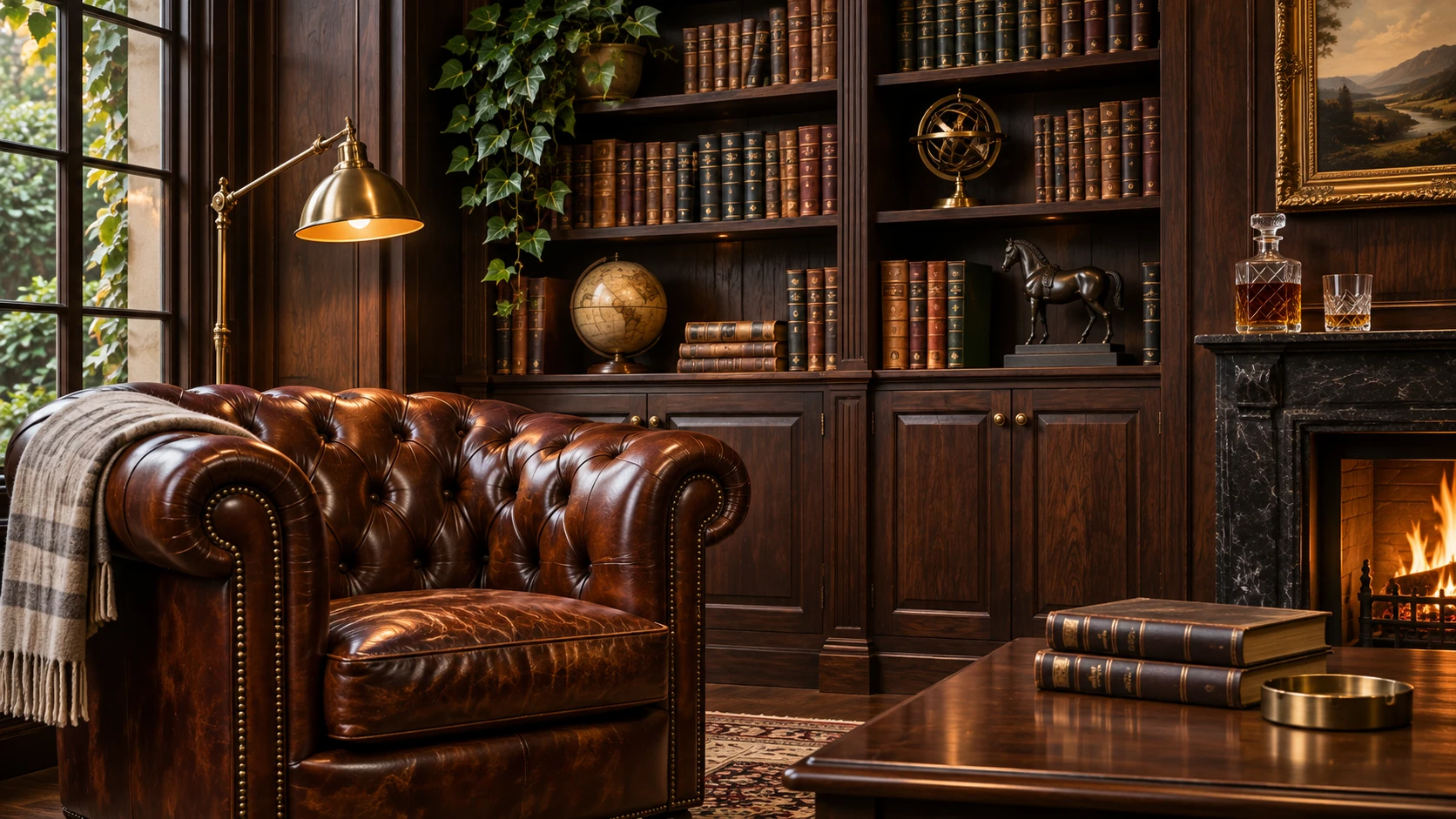
There is a difference between a house that photographs well and one in which people are pleased to spend an afternoon. A gentleman’s home need not be large, expensively furnished or arranged according to somebody else’s taste. It should be clean, cared for and comfortable for the people who live there. When visitors arrive, those same ordinary standards become hospitality. A place to put a coat, a comfortable chair, something to drink and a host who is glad to see them will matter long after the furniture has been forgotten.
Begin at the front door
The welcome starts before anyone sits down. Keep the entrance reasonably clear, make the doorbell or knocker easy to find and ensure guests can enter safely. If you know the weather will be poor, have somewhere for wet coats and umbrellas. A visitor carrying several bags should not need to ask whether it is permissible to put them down.
There is no need to pretend that nobody lives in the house. Shoes by the door and a book on a table are ordinary signs of life. The difference is whether the entrance is ready for another person. A few minutes of practical attention can spare everybody an awkward beginning.
Think about how the room will actually be used
A comfortable chair should have somewhere nearby for a cup. A reader needs a useful light. People sitting together should be able to see and hear one another without shouting across the furniture. The layout that looks impressive in a photograph may be inconvenient when four people arrive for conversation.
Pay attention to temperature and ventilation, and offer a seat that suits the guest rather than assuming everybody prefers the same sofa. Leave clear paths through the room and provide a little space for belongings. Hospitality begins with making ordinary movements easy, not with buying another decorative object.
Keep the essentials in good order
Fresh towels in the bathroom, a working light, adequate soap and somewhere to dispose of waste are unremarkable until they are missing. Check these things before visitors arrive. Make sure the surfaces used for food and drink are clean, and attend to small repairs rather than letting a loose handle or faulty latch become a permanent feature.
Regular care is preferable to an exhausting effort just before company arrives. Open the windows when appropriate, put things back after using them and keep a modest supply of practical essentials. A house need not be immaculate, but visitors should feel confident that it is looked after.
Let the home show something of its owner
Books you have read, photographs of people you love and a piece of furniture repaired rather than replaced tell a more convincing story than a room built from an expensive shopping list. If you collect objects, display those that mean something to you. Leave enough space for them to be noticed without making the room difficult to use.
Taste grows over time. There is no shame in a chair bought second-hand or a table inherited from a relative. A well-kept and useful object can be more handsome than a fashionable one chosen in haste. Your home should reflect a life being lived, not an attempt to imitate a hotel lobby.
Respect the habits and privacy of others
When somebody stays overnight, explain where the towels are kept, how the heating works and what time the household generally rises. Allow a guest some privacy and do not treat every moment as an invitation to be entertained. Ask before entering the room in which he is staying, and let him keep to his own reasonable routine.
In a shared home, good manners also apply to the people who live there every day. Do not invite a crowd without discussing it first. Keep noise considerate and make room for different needs. It is difficult to offer generous hospitality to visitors while making one’s own household uncomfortable.
Be present when the company arrives
You do not need to apologise for every worn floorboard or explain why the sitting room has not been redecorated. Once visitors are comfortable, stop assessing the furniture and speak to them. Offer refreshments, ask about their journey and give them your attention. A man who spends the visit apologising for his home has made it harder for others to relax.
If something goes wrong, put it right without drama. Find an extra chair, move away from a draught or make another pot of tea. Most people remember the warmth of their welcome more clearly than the exact arrangement of a room. Let the house support the occasion, then turn your mind to the people in it.
A home is made welcoming by its use.
Keep the essentials in order, furnish with good judgement and make a guest’s comfort more important than an impressive display.