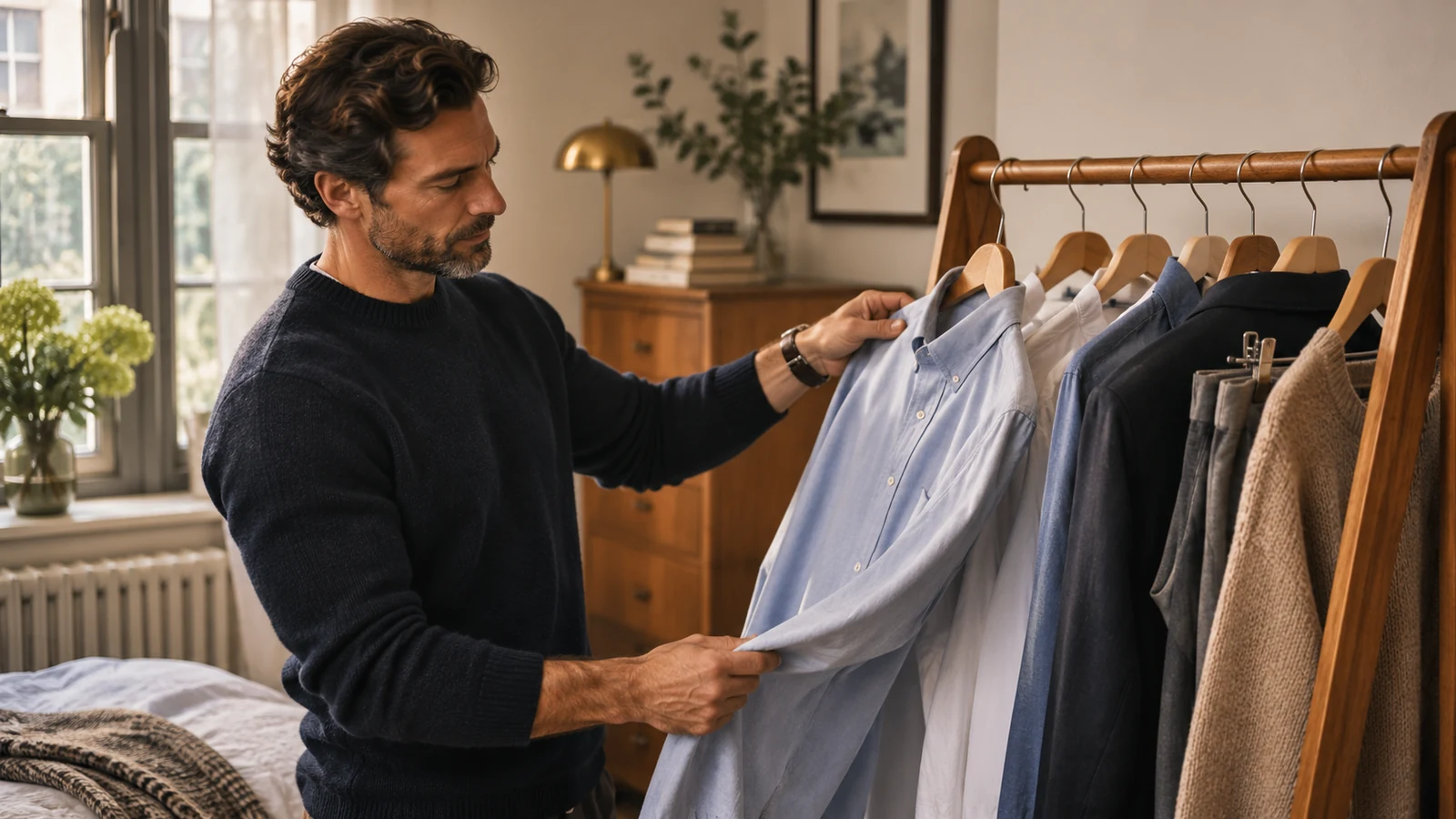
A useful wardrobe is not one that fills every rail. It is one that makes the ordinary business of getting dressed simple. The old advice to buy carefully and keep clothes in good order is more valuable than a procession of seasonal lists. A gentleman who has a sound jacket, good trousers, several dependable shirts and shoes appropriate to his life is better equipped than a man with an expensive collection that never quite works together. Start with the life you actually lead, not the one pictured in an advertisement.
Take stock before spending
Lay out the clothes you wear most and the ones you avoid. Ask why. Some will no longer fit, some require repair and some may have been bought for an imagined occasion that never arrived. Separate the garments worth keeping from those beyond reasonable use. Repair what is repairable before deciding that a replacement is needed.
Then write down the real gaps. A man who spends five days a week in an office may need two good pairs of work trousers more than a third weekend jacket. Someone who walks everywhere may need weatherproof shoes before a delicate dress pair. A wardrobe should serve its owner. It should not become a collection assembled to impress strangers.
Begin with versatile, well-fitting foundations
For many men, dark trousers, chinos, plain shirts, useful knitwear and one well-fitting jacket will do a surprising amount of work. Navy, charcoal, white, pale blue, olive and brown are easy to combine, but they are not compulsory. Choose colours that suit the clothes you already own and that you will genuinely wear.
Try on garments before assuming the label size tells the whole story. Shoulder fit is particularly important in tailored jackets. Trouser waist and length should be comfortable and deliberate. If alterations can improve an otherwise sound garment, consider them. A smaller number of properly fitted pieces will generally look better than a crowded wardrobe of compromises.
Choose cloth for the conditions
Wool is useful in tailoring and knitwear because it can regulate warmth and recover from wear when cared for properly. Cotton is a dependable choice for many shirts and casual trousers. Linen is pleasant in warm weather, though it will crease. Good blends can be entirely serviceable. The material label should be read alongside how the garment actually feels and behaves.
Consider the climate and the amount of care a garment requires. A handsome heavy coat is no bargain if you live somewhere too warm to wear it. A delicate fabric is an unwise daily choice if your work regularly damages clothes. There is no prize for buying the most precious cloth. Usefulness comes first.
Spend in proportion to wear
If a pair of shoes will be worn three days a week, their fit, construction and repairability deserve attention. A jacket kept for formal occasions can be bought more slowly. A plain undershirt need not compete for the largest part of the clothing budget. The question is not merely what something costs but how well it will do its job over time.
Do not be carried away by a discount. An unwanted garment is expensive at any price. Nor should you imagine that a famous name guarantees quality. Examine seams, buttons, lining and how the cloth has been cut. Buy a good thing because it is useful and well made, not because the label announces its importance.
Make a simple combination before buying another piece
A reliable wardrobe is a set of clothes that work together. Before buying a jacket, ask whether you have trousers and shoes to wear with it. Before choosing a striking shirt, consider how many real occasions it will suit. Try to build several sensible combinations around pieces already in your possession, then identify precisely what is missing.
This does not mean every man should dress alike or suppress personal taste. A favourite colour, a patterned scarf or a beautifully worn jacket can make an outfit unmistakably his own. The distinction is between an individual choice and an impulsive purchase that has nowhere to go.
Care is part of ownership
Hang jackets on proper hangers and allow shoes to dry between wears. Follow the garment’s care label, air clothing when appropriate and deal with stains promptly rather than letting them set. Brush a wool coat, replace loose buttons and have a good pair of trousers repaired before a minor issue becomes irreparable.
Keep the wardrobe orderly enough that you know what is there. If you cannot see half your clothes, you will keep buying versions of things you already own. A gentleman ought to look after his possessions, not spend his life managing them. The purpose of a sound wardrobe is to give him more time for everything else.
A wardrobe should earn its place.
Know your needs, buy for fit and use, and look after what you choose. Good style is often the result of fewer, better decisions made over many years.