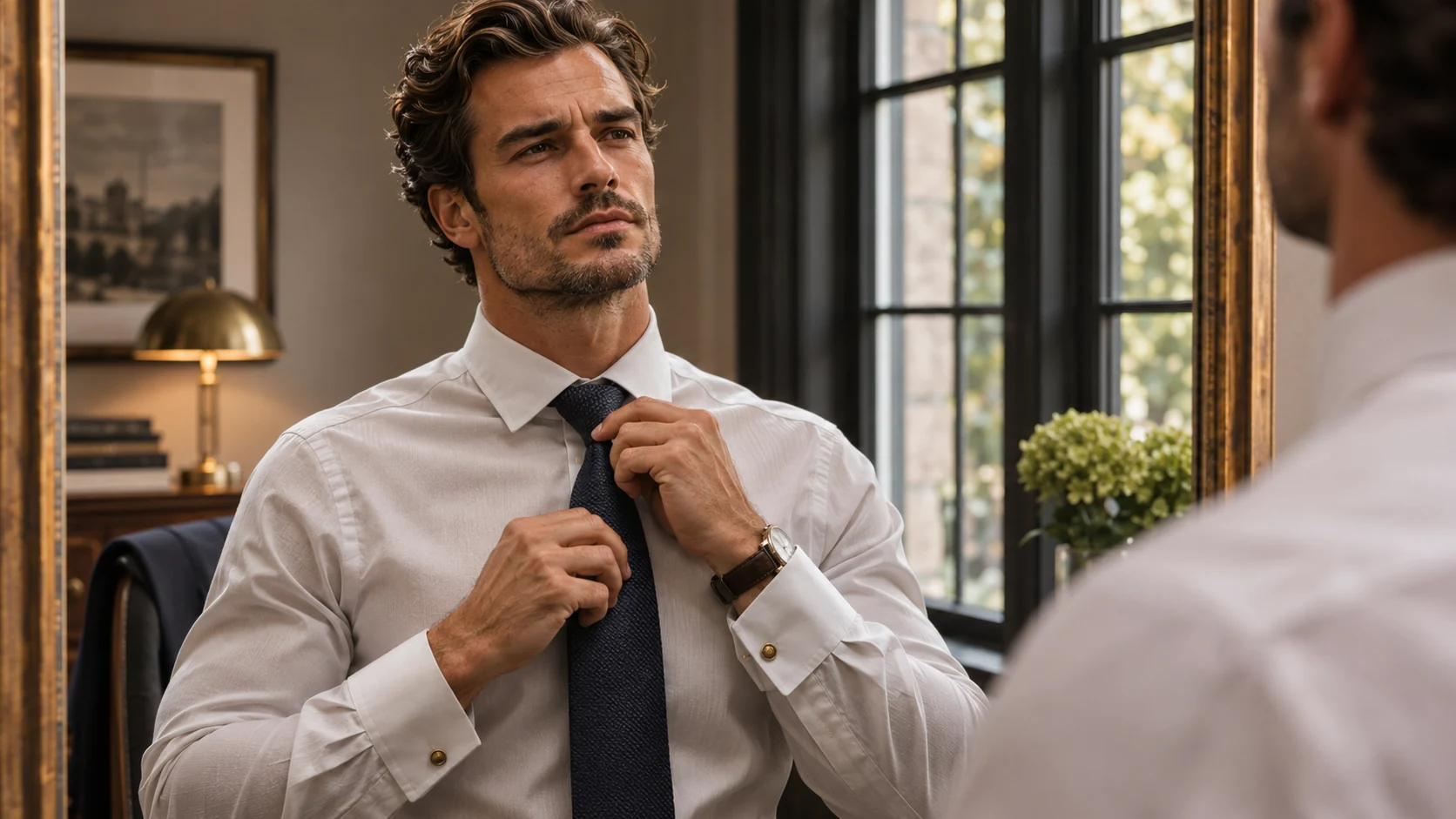
Few items of clothing are easier to overthink than a tie. The sensible choices are also the most enduring.
A tie should help complete an outfit. It is neither a substitute for a good shirt nor an invitation to demonstrate how much you know about dress. Its colour, pattern and knot are all secondary to a simpler question. Does it belong with the clothes you are wearing and the occasion you are attending?
For a man who does not wear a tie every day, a small selection can be enough. What matters is having a dependable option ready when an invitation, meeting or ceremony calls for one.
Start with the dress code
Some occasions specify a tie, while others leave room for judgement. A conventional business meeting, wedding or formal ceremony may call for one. At a relaxed lunch or informal office, wearing a tie may be unnecessary. Before selecting the tie itself, check what the occasion expects of the whole outfit.
Black tie is a specific evening dress code and ordinarily calls for a black bow tie with the appropriate formal clothes, not an ordinary necktie. This is worth remembering because the phrase is sometimes used casually to mean that guests should dress smartly. If the invitation is unclear, ask the host.
At a serious event, a restrained tie is usually more useful than a conspicuous novelty design. Weddings and celebrations allow more colour, but consider the hosts, the setting and the hour. The point is to show that you have understood the occasion.
Choose the tie for the clothes you already own
A navy, burgundy or dark green tie works with many white and pale-blue shirts. A plain colour or modest pattern is generally easier to combine than a large motif. If you wear a checked jacket or striped shirt, give the eye somewhere to rest. A simpler tie can balance a busier garment.
Patterns can work together, but they require a little care. Two stripes of very similar size can compete. A plain tie with a patterned shirt is often easier. You do not need to match the tie exactly to a pocket square. In fact, an identical matching set can look more deliberate than the occasion requires.
Think about the jacket before the tie. A heavy wool suit and a fine silk tie can look handsome together. A softer casual jacket may suit a knitted tie. The clothes should feel like parts of one outfit, not unrelated purchases brought together because each looked good separately.
Understand fabric and width
Silk is a familiar choice for formal and business ties because it drapes well and comes in a wide range of colours and weaves. Wool is useful in cooler weather and can sit comfortably with heavier jackets. Knitted ties are usually more informal, particularly those with a straight end. Cotton and linen versions can suit warmer, less formal dressing.
There is no universal ideal width. The tie should work with the jacket lapels, your shirt collar and the period of dress it belongs to. Very narrow or very wide ties can make an otherwise ordinary outfit feel tied to a passing fashion. A moderate width is a practical starting point for most wardrobes.
Length is easier to judge. When tied, the tip of an ordinary necktie should generally reach near the waistband or belt buckle. It should not finish far up the stomach or hang below the belt. The precise result depends on the tie, the knot and your clothing, so check in a mirror before leaving.
Learn one dependable knot
A four-in-hand is a useful everyday knot. It is relatively small, slightly asymmetrical and works with many collars. A half-Windsor creates a somewhat fuller, more symmetrical knot and may suit certain shirts and occasions. You do not need an extensive collection of elaborate knots to dress well.
Begin with the collar button fastened if that is how you intend to wear the shirt. Form the knot without pulling the fabric harshly, then draw it up until it sits comfortably beneath the collar. The tie should remain in place without pressing against the neck.
A small dimple beneath the knot can be attractive, but it is not compulsory. More important is that the knot sits squarely, the narrow end is concealed and the front blade hangs naturally. Take a moment to check the result before you leave home.
Keep accessories in their place
A tie bar is useful when it holds the tie neatly against the shirt. It should not be so long that it projects beyond the tie’s edges, nor should it be fixed in a position that pulls the fabric awkwardly. If your jacket remains buttoned and the tie does not move around, a tie bar may be unnecessary.
Avoid treating a tie as the centre of the outfit. A striking colour can be enjoyable at an appropriate event, but it should not overwhelm the person wearing it. The best use of a tie is often that nobody needs to remark on it at all.
Care for it properly
Untie a necktie after wearing it. Pulling it loose and storing it with the knot still formed can create creases and damage the fabric over time. Hang or roll it gently according to the material and the storage space available. Keep silk away from rough edges that may catch the weave.
Treat stains carefully and follow the maker’s cleaning advice. Silk ties in particular can be damaged by improvised washing methods or excessive heat. If a tie is badly marked, specialist cleaning may be the safer choice, though it cannot guarantee a complete result.
A handful of well-chosen, well-kept ties will serve most men better than a drawer full of designs that never quite match a shirt. Choose for the occasions you attend, learn a reliable knot and give the rest of your attention to the day ahead.
The right tie belongs to the occasion.
A tie works when its knot sits neatly, its length is right and its colour belongs with the shirt and jacket. Once it is tied, turn your attention to the people you have come to meet.