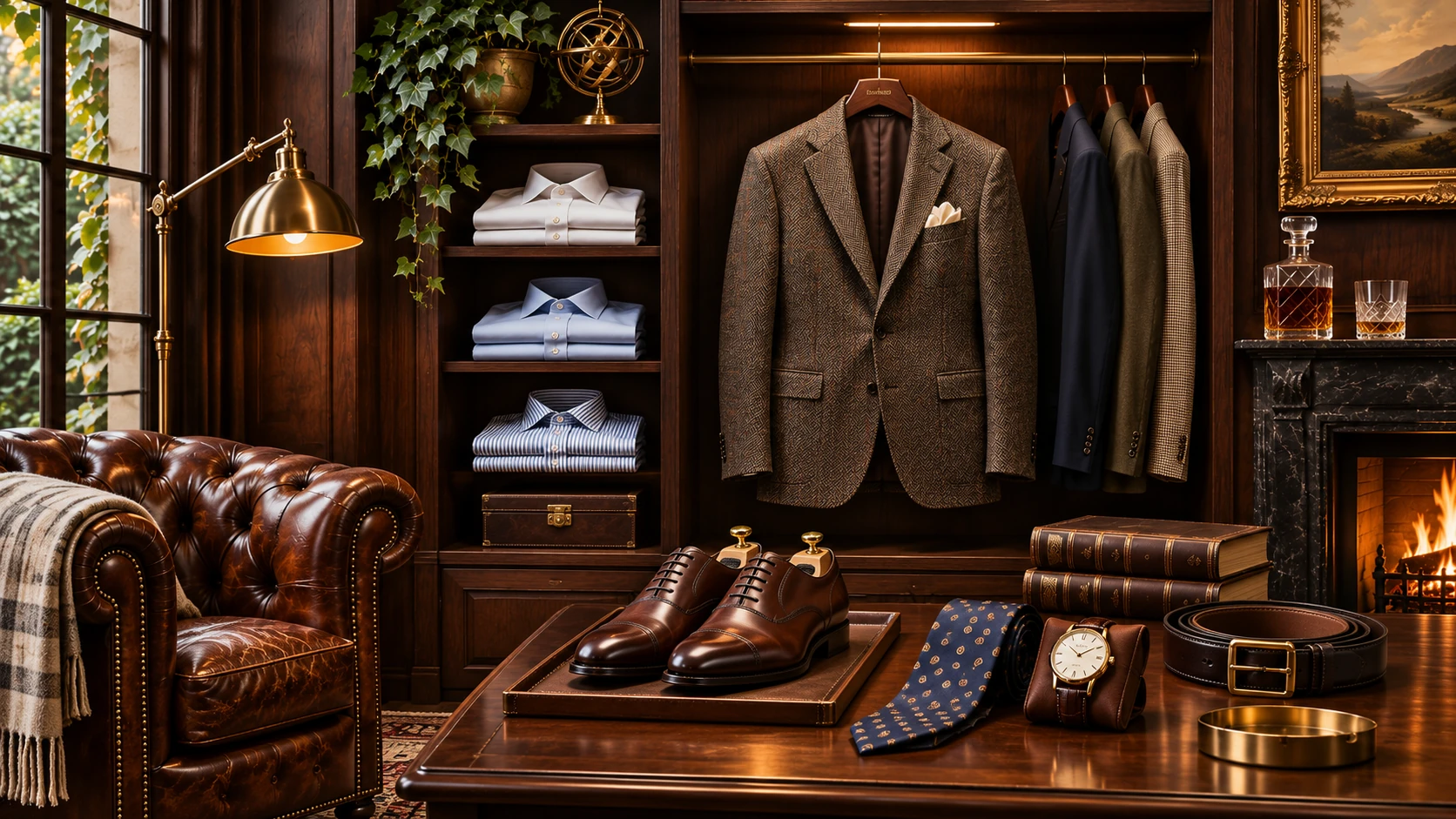
You can tell something about a man’s habits by the state of his shoes. They need not be new, costly or shined like a parade-ground boot. They should be clean, well cared for and appropriate to the occasion. Our grandfathers often had fewer pairs and understood how to make them last. Regular brushing, sensible drying and an occasional polish will do more for decent leather shoes than neglect followed by a frantic effort before a wedding. The work is simple enough to learn and worth doing yourself.
Start with the right tools
A soft horsehair brush, a clean cotton cloth, suitable leather conditioner and a good shoe cream or wax polish are enough for ordinary smooth leather. You do not need a cabinet full of fashionable products. A shoehorn helps protect the heel, and properly fitted shoe trees can reduce creasing and help shoes recover their shape between wears.
Different leathers need different treatment. Suede and nubuck require their own brushes and care products, and should not be covered in ordinary wax polish. Patent leather is also a different case. When in doubt, follow the maker’s instructions or ask a good cobbler rather than experimenting on an expensive pair.
Let wet shoes dry naturally
Rain is not a reason to throw shoes away, but heat can damage leather. Remove mud and surface moisture with a soft cloth, insert absorbent plain paper if necessary and leave the shoes in a ventilated room. Do not put them against a radiator or blast them with hot air in the hope of wearing them an hour later.
Once dry, assess whether they need conditioning. Rotate pairs if possible so that the lining and leather have time to recover. A man who insists on wearing one damp pair every day will wear it out more quickly than the man who gives it a little rest.
Brush before you polish
Dust and grit work their way into creases and can act like an abrasive. Brush the shoes first, paying attention to the welt and the area where the upper meets the sole. Wipe away any remaining surface dirt with a lightly damp cloth and allow the leather to dry before applying cream.
Use polish sparingly. Work a small amount of suitable cream into the leather and let it settle according to the product directions, then buff gently with a clean brush or cloth. Heavy layers of polish can build up and look worse than an honest, well-maintained surface. Wax can add a greater shine where appropriate, but should not be smeared thickly across areas that flex.
Mind the edges and soles
A pair can look perfectly respectable from above while the heels have worn crooked and the soles have begun to separate. Turn the shoes over regularly and inspect the tread, sole stitching and heels. If the construction permits repair, take them to a reputable cobbler before the damage becomes severe.
A small repair made at the right time may save a good pair for several more years. The same is true of laces. Replace frayed laces instead of waiting for one to snap on the way to a meeting. This is ordinary maintenance, not an elaborate hobby.
Store them with a little thought
Clean shoes before putting them away for a season. Keep them dry and away from prolonged direct sunlight, which can fade finishes. Use shoe trees when appropriate, avoid crushing pairs beneath other belongings and keep them in a place with airflow rather than trapping damp inside a sealed bag.
If you travel, a simple shoe bag will keep polish and street dirt away from shirts. Pack shoes where they cannot be flattened by heavy luggage. The most useful equipment is often the least complicated.
Know when to stop polishing
Not every mark needs to be erased. Good leather develops signs of wear, and a repaired pair may look better than a cheap new one that has never been comfortable. There is a difference between honest ageing and neglect. Cracked leather, neglected soles and a collapsing heel are matters to address. A slight crease across the vamp is simply evidence that the shoe has been worn.
Spend your effort on keeping the shoes sound and presentable, not on making every pair look untouched. A gentleman should be ready to leave the house, not spend the morning admiring his own reflection in a toe cap.
Care regularly, repair early.
Brush off the day’s dirt, dry leather properly, apply the right treatment and visit a cobbler before small wear becomes serious damage. Good shoes reward ordinary discipline.