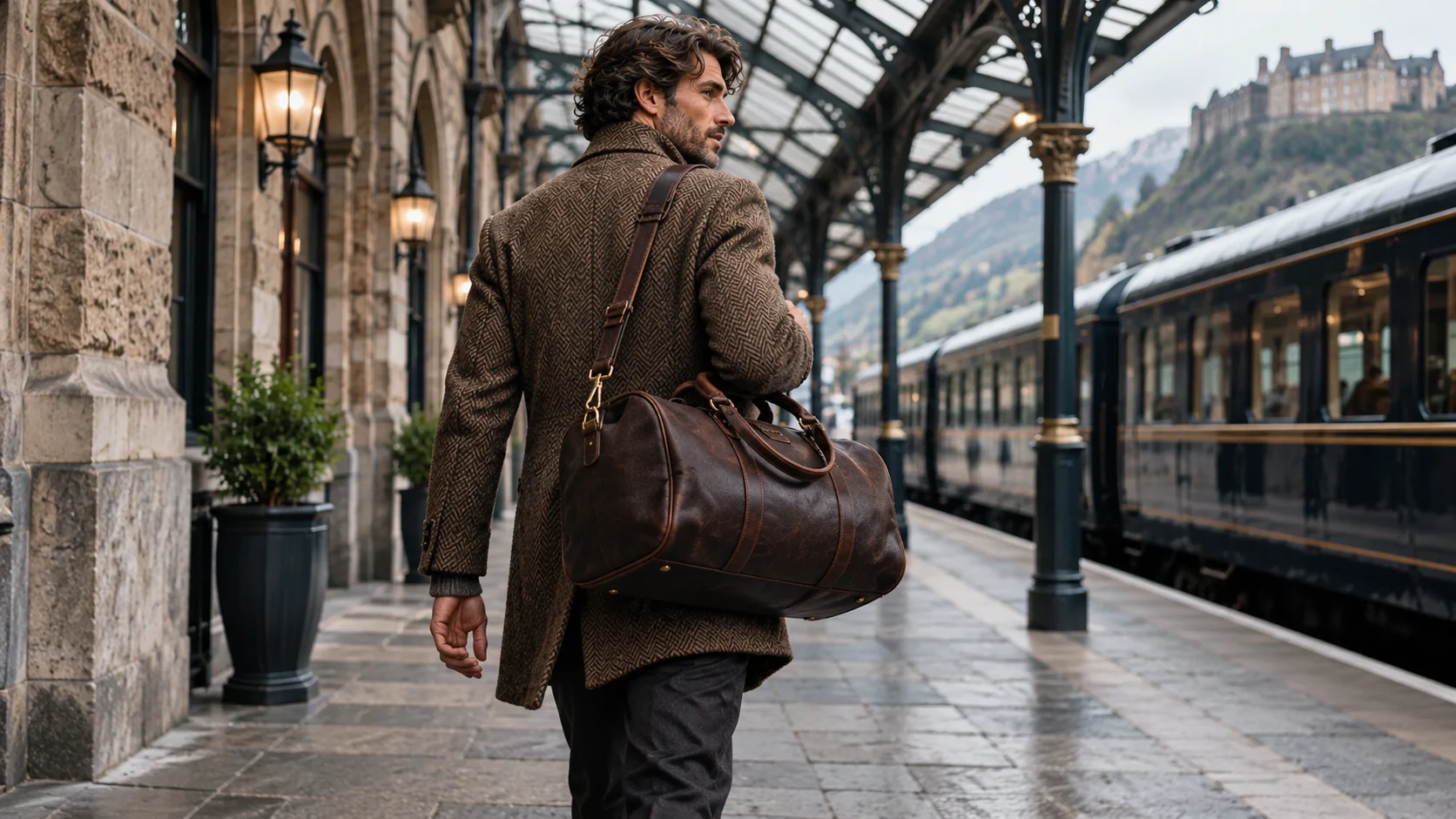
Good luggage is remembered mainly when it goes wrong. The right bag makes a short journey pleasantly uneventful.
A weekend bag should hold two or three days of clothing, the personal things you need and perhaps a book or laptop, without requiring a struggle every time you open it. A handsome bag that becomes uncomfortable after ten minutes on a station platform is not a particularly good bag. Nor is a vast holdall that encourages you to carry everything you might possibly want.
As with most useful possessions, begin with what you actually do. The best choice for a train journey with a short walk from the station may differ from one for a drive to visit family or a flight with strict cabin baggage limits.
Decide what a weekend means to you
Before shopping, lay out what you would take on a typical two-night visit. Include changes of clothes, toiletries, charging cables and any shoes you would realistically need. Allow some room for items worn on the return journey, but resist packing for every imagined possibility.
A short weekend away usually requires less luggage than expected. If you take only one bag, however, make sure there is a secure place for your keys, wallet, passport and travel documents. A bag that swallows small objects into its main compartment can be frustrating in a queue or at a station gate.
If you fly, check the current cabin-size and weight allowance of the airline you are travelling with. Rules differ, and a bag sold as a carry-on is not guaranteed to meet every carrier’s restrictions. Measure the bag when packed, not merely when it is empty.
Look at the opening and compartments
The opening matters almost as much as the size. A long zip that lets the bag open widely makes it easier to see what you have packed. A narrow opening can force you to empty everything to find a clean shirt at the bottom. Test the zip and check that it moves smoothly around the corners.
Some internal divisions are useful, especially a separate place for shoes or damp toiletries. Too many pockets can be just as awkward as too few. A small zipped section for documents and one easy-to-reach external pocket may be enough for ordinary journeys.
Check the base. A bag that tips over whenever you put it down or drags through puddles will soon become annoying. Reinforced corners or a suitably firm bottom can help, though they also add weight. Choose the amount of support that suits how you travel.
Choose the material for the journey
Canvas can be practical and relatively easy to carry. Its quality and water resistance vary, so do not assume that every canvas bag handles rain equally well. Leather can age attractively with suitable care, but it may add weight and require more attention. Nylon and other technical fabrics can offer lower weight and useful resistance to weather, depending on their construction.
Look beyond the material name. Examine the seams, attachment points and handles. Lift the bag with a few belongings inside. The shoulder strap should feel secure and comfortable, particularly if you expect to walk any distance. A padded strap can help, but its position and adjustment matter just as much.
The best bag for you is the one you are willing to carry when it is full. A stylish weekend bag that needs frequent switching between hands may be less useful than a plainer one that sits comfortably on the shoulder.
Make the bag work with how you travel
For journeys by train or coach, think about lifting the bag into an overhead rack and getting it down again. A bag that is too heavy to lift comfortably is probably too heavily packed. Keep what you may need during the journey near the top, so you do not have to unpack everything in public.
For car travel, the priorities may be different. A holdall that opens fully and fits neatly into the boot can be convenient even if it would be cumbersome on foot. If you regularly use a suitcase, a smaller bag with a sleeve that fits over the suitcase handle can be useful.
Do not overlook where the bag will go when you arrive. A weekend guest should not need to spread a large collection of luggage across the room. Bring something that can be placed on a stand, under a chair or beside the bed without becoming an obstacle.
Pack with some method
Put shoes into separate bags or compartments so they do not mark clean clothing. Roll or fold garments according to their fabric and how easily they crease. Toiletries should be securely closed, with anything likely to leak kept in a separate pouch. Place small items in one familiar location rather than moving them around every time you pack.
If you will need a shirt or jacket immediately after arrival, pack it last. If you are heading to an event, carry anything essential to the dress code where it will be easy to find. A missing belt, charger or pair of cufflinks is more irritating than most overpacking prevents.
After returning home, empty the bag promptly. Check its pockets for receipts and travel documents, wipe away marks and leave it open to air if it has become damp. This small habit prevents an unpleasant discovery before the next trip.
Buy something you can use often
Avoid choosing a weekend bag solely because it looks impressive in a hotel photograph. Consider its weight, opening, straps, care instructions and usefulness when full. A dependable holdall should suit a family visit, a brief city break and an ordinary journey without requiring special treatment.
The aim is not to carry more. It is to travel with what you need, find it when you need it and have one less thing to think about once you arrive.
Pack for the journey you are making.
Take a bag that holds the clothes and essentials you need, carries comfortably and fits the journey. A small holdall that is easy to live with is better than an impressive bag that becomes a burden.