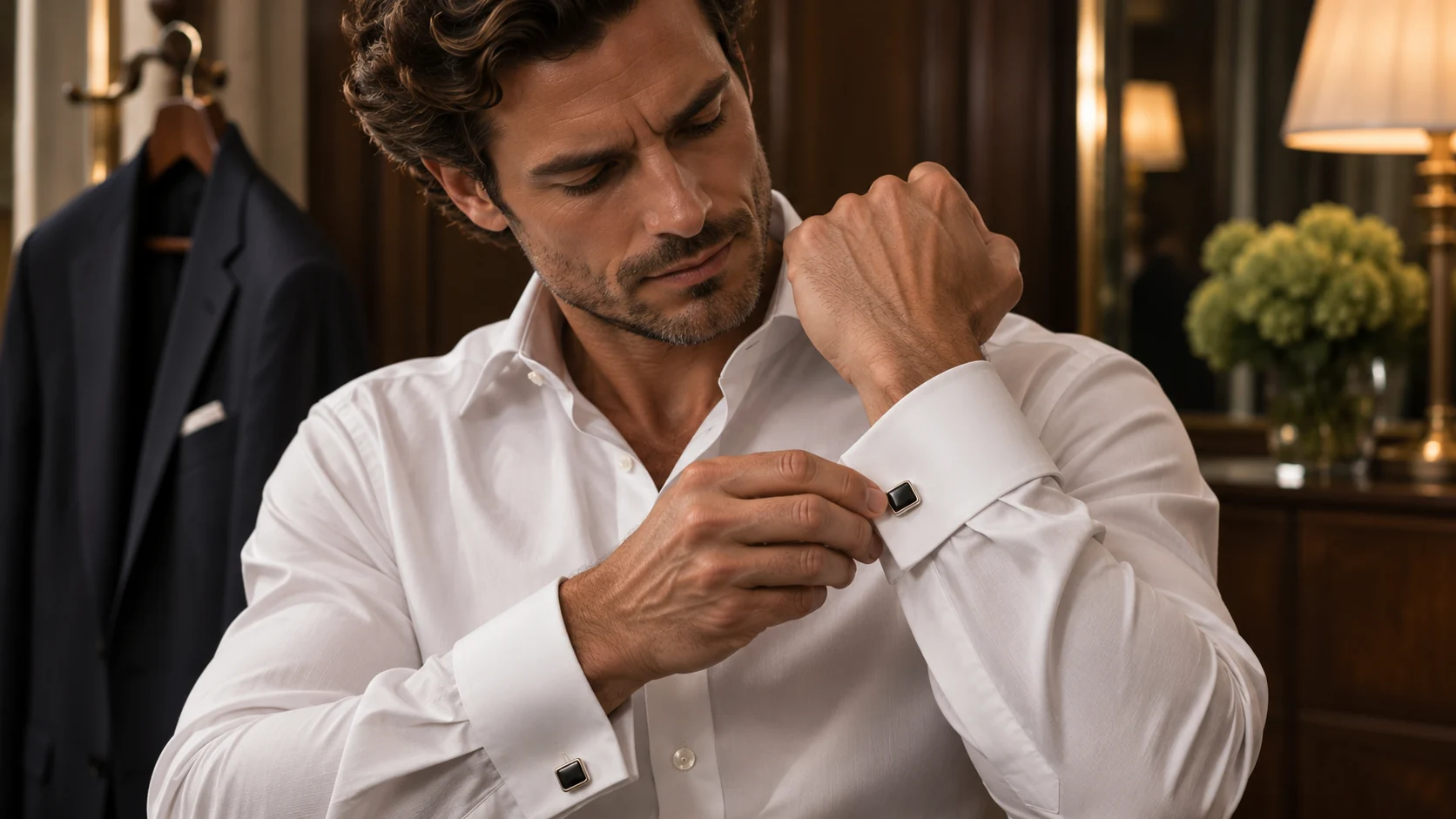
An accessory is only useful when it belongs with the clothes and the occasion.
A pair of cufflinks is not complicated. It fastens a shirt cuff in place. Yet because cufflinks are often displayed in jewellers’ cases, given as presents and brought out for weddings, they have acquired a reputation for being difficult to get right. They need not be. A man who understands the shirt he is wearing, the occasion he is attending and the way the fastening works can make a good choice without much fuss.
Begin with the shirt, not the cufflink
Most everyday shirts have barrel cuffs, which overlap and fasten with an ordinary button. They do not require cufflinks. A double cuff, often called a French cuff, folds back on itself and has paired holes rather than a fixed button. It is designed for cufflinks. There are also single cuffs with holes on both sides, found on some formal shirts.
This distinction matters when buying a gift or shopping for an occasion. A handsome pair of cufflinks is no use if the intended shirt cannot accommodate them. Nor is there any reason to alter an ordinary shirt simply to wear a particular accessory. Begin by checking the cuff, then decide what belongs on it.
With a double cuff, fold the fabric back neatly, bring the holes together and pass the cufflink through all the layers. Some cufflinks use a pivoting bar, others a fixed back or a chain. The fastening should hold securely without pinching the wrist. A double cuff can be slightly more substantial than a barrel cuff, so check how it sits beneath the jacket sleeve.
Know when they belong
Cufflinks are most at home with more formal clothing. A wedding, evening occasion or business setting that calls for a properly tailored suit can be a suitable place for them. Black tie is a different matter. Depending on the dress shirt, simple formal cufflinks may be appropriate, and the shirt’s construction should guide the choice. There is no need to introduce a large, attention-seeking pair just because the occasion is important.
They can also be worn with an ordinary suit if the shirt has the right cuffs. That does not mean they improve every outfit. At an informal lunch or a casual office, a double-cuff shirt may seem unnecessarily elaborate. Dressing well includes knowing when to leave something in the drawer.
One reliable test is whether the cufflinks are helping you finish an outfit you have already chosen, or whether the rest of the outfit is being built solely to display them. The former usually produces the better result.
Choose a pair you can wear again
Silver-toned cufflinks are straightforward with navy, charcoal and many formal shirts. Gold-toned designs can look handsome with warmer colours or other accessories you already wear. Neither finish has a universal rule attached to it. Look at the whole outfit, and avoid adding several different decorative metals without a reason.
A plain oval, round or rectangular pair can serve for years. Engraved initials, club insignia and commemorative designs have their place, but their meaning matters more than their novelty. The pair you wear repeatedly is more useful than the clever one that suits a single evening.
You need not spend lavishly. Check that the fastenings operate smoothly, the pair is matched and there are no sharp edges to catch the cuff. Put both cufflinks through the shirt while getting dressed, then examine how the cuff sits with your arms at your sides. If one keeps rotating or slipping loose, choose another pair.
Make room for personality without turning it into a performance
There is nothing wrong with enjoying cufflinks. A family pair can carry a memory. A restrained enamel design can introduce a little colour to an otherwise plain combination. A pair received for a significant occasion may become something you look forward to wearing again. Such details can make getting dressed a pleasure.
The important distinction is between something personal and something demanding attention. A bright novelty pair might suit a particular gathering. It may look out of place at a formal ceremony. There is no need to ban unusual designs, but judge them by the setting rather than by how amusing they appear in the box.
Cufflinks are also a poor substitute for a well-fitting shirt. If the collar is too loose, the sleeves too long or the cuffs too bulky beneath the jacket, the accessory will not correct those problems. Resolve the fit first.
Wear and care for them properly
A useful habit is to keep cufflinks in a small case or divided tray. Loose pairs quickly become scratched, separated or difficult to find. After wearing them, wipe away marks with a suitable soft cloth. Different metals, plating and stones require different care, so follow the maker’s guidance rather than applying a cleaning solution indiscriminately.
When travelling to an event, pack the cufflinks with the shirt rather than leaving them loose at the bottom of a case. Check the pair before leaving home. It is an easy detail to forget, particularly if you seldom wear double cuffs. Carrying a spare ordinary shirt is not necessary, but knowing that both fastenings work is sensible preparation.
If a cufflink has sentimental or considerable monetary value, take additional care when removing a coat or changing clothes. Small objects are easily misplaced in unfamiliar rooms. Put them back in the same case as soon as you take them off.
Let the occasion be remembered, not the accessories
Cufflinks reward a small amount of knowledge. Choose the right shirt, use a secure fastening and select a pair that suits the event. After that, they need little attention. Their purpose is to complete the clothes you are wearing, so that you can give your attention to the people you have come to meet.
A gentleman may appreciate fine things, but he should never need them to carry the conversation.
Start with the cuff.
Choose a shirt intended for cufflinks, secure the fastening properly and let the pair suit the occasion. There is no benefit in a grand accessory worn with the wrong cuff.