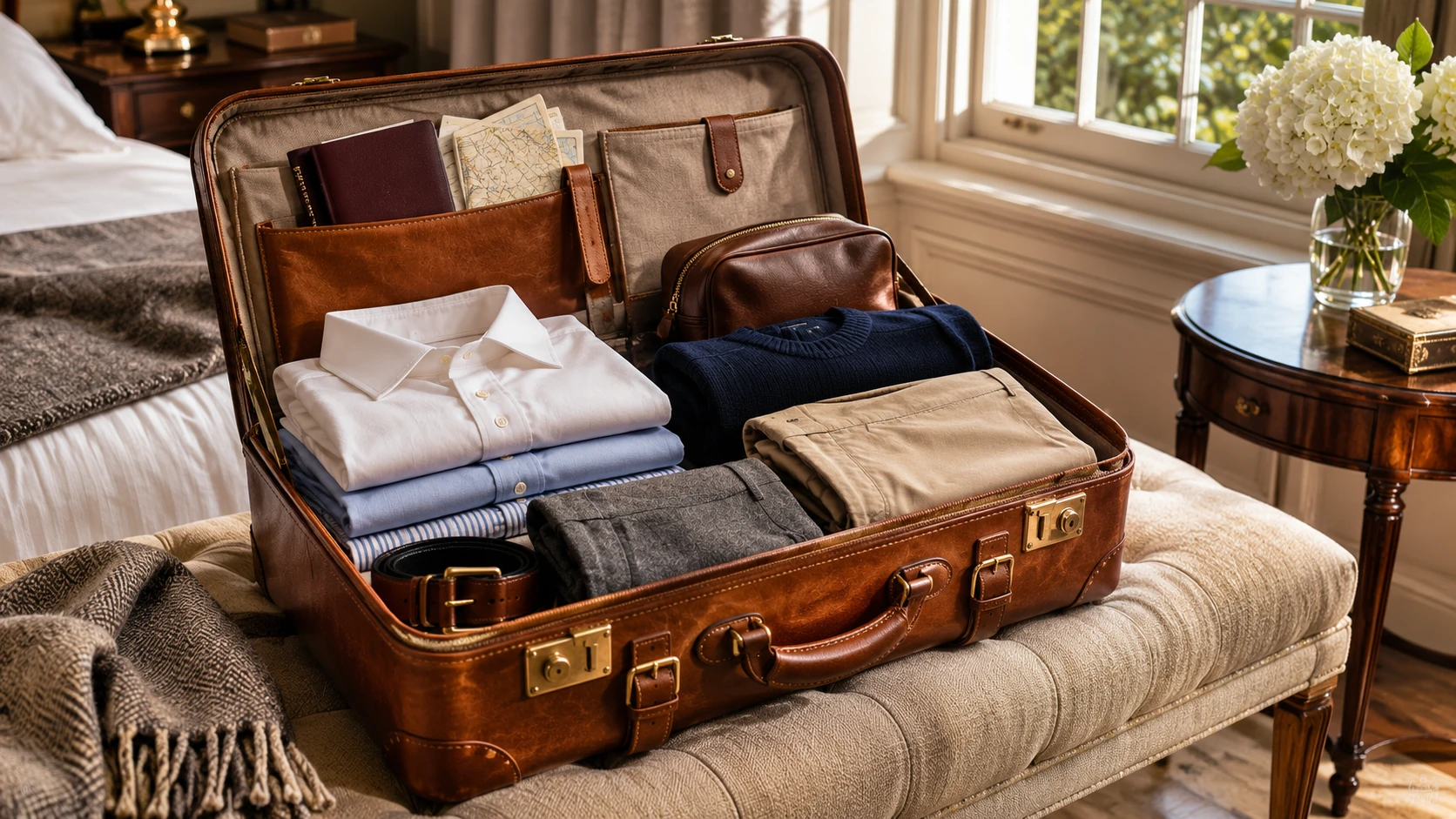
A gentleman should be able to pack his own case and know where to find what he needs. There is nothing admirable about dragging half a wardrobe through a station, nor about arriving without a clean shirt because he was determined to travel light. Good packing is a modest exercise in foresight. Work out what the journey demands, make a sensible choice of clothes and attend to the small essentials before departure. The result is less luggage to carry and more freedom to enjoy where you are going.
Begin with the journey, not the wardrobe
Before opening a drawer, look at the itinerary. How many nights will you be away? Will you be walking for hours, attending a formal dinner, working outdoors or sitting on a train? Check the likely weather and the requirements of any important occasion. If you have an invitation stating a dress code, take it seriously rather than hoping your everyday jacket will do.
Write a short list based on actual activities. Separate what is essential from what might conceivably be useful. Imagining every possible change of plan is how a small trip acquires an unreasonable quantity of luggage. Allow for one sensible contingency, not a wardrobe for an entirely different holiday.
Choose clothes that work together
A useful travelling wardrobe is built around a few dependable combinations. Choose trousers, shirts and knitwear that can be worn with more than one other piece. A jacket that can accompany both a daytime appointment and an evening meal saves space. Wear your bulkier shoes or coat during the journey when practical, and carry only what the schedule is likely to require.
Do not confuse versatility with neglect. If you need a proper suit, pack one carefully. If you expect to be outdoors in persistent rain, take clothing that will keep you comfortable. The standard is simple. Each garment should have a reason to travel and should be clean and fit for its purpose.
Give footwear a realistic allowance
Shoes occupy a surprising amount of room and weight. For many short journeys, one comfortable pair worn in transit and one additional pair suited to the important occasion will be enough. Check that both have been worn before. A holiday is a poor moment to discover that new shoes are uncomfortable after twenty minutes.
Clean the soles before packing, use bags to separate shoes from clothing and place heavy items where they will not crush a collar or crease a jacket unnecessarily. If the destination demands special footwear for walking or sport, put practicality before appearance.
Keep important things close at hand
Identification, travel documents, tickets, essential medication, spectacles and items needed during the journey should not be buried at the bottom of a checked case. Keep them together in an accessible, secure place. Make sure electronic devices are charged and check transport rules for batteries, liquids and restricted items with the relevant operator before travelling.
Carry a change of basic clothing when a delayed suitcase would cause genuine difficulty, but do not create a second enormous bag in the name of preparedness. Check the expiry dates and entry requirements for necessary documents in good time. A well-packed bag cannot compensate for an invalid passport.
Pack for arrival as well as departure
Put the things you expect to need first near the top. A night arriving late may require only toiletries, a fresh shirt and sleepwear. You should not need to unpack every possession in order to brush your teeth. Fold or roll clothing according to its fabric and what keeps it presentable. There is no single miraculous method for every garment.
Leave a little space for the journey home. Buying a book or a modest gift should not require sitting on the lid of a case. Before closing it, check the list rather than relying on the hopeful feeling that everything must be inside.
Make the return journey equally orderly
Travel becomes harder when every item is thrown back into the case without thought. Keep worn clothes apart where possible and check drawers, wardrobes, charging points and the bathroom before leaving. A quick inspection costs less time than arranging for a forgotten item to be posted across a country.
When you return, unpack promptly, attend to laundry and put the case away clean and dry. Replenish any travel essentials you have used. The next departure will be much easier if you do not leave the consequences of this one waiting for you.
Take what you need and know where it is.
Thoughtful packing saves time, luggage space and needless difficulty. It is preparation in the service of a better journey, not a competition to carry the smallest bag.