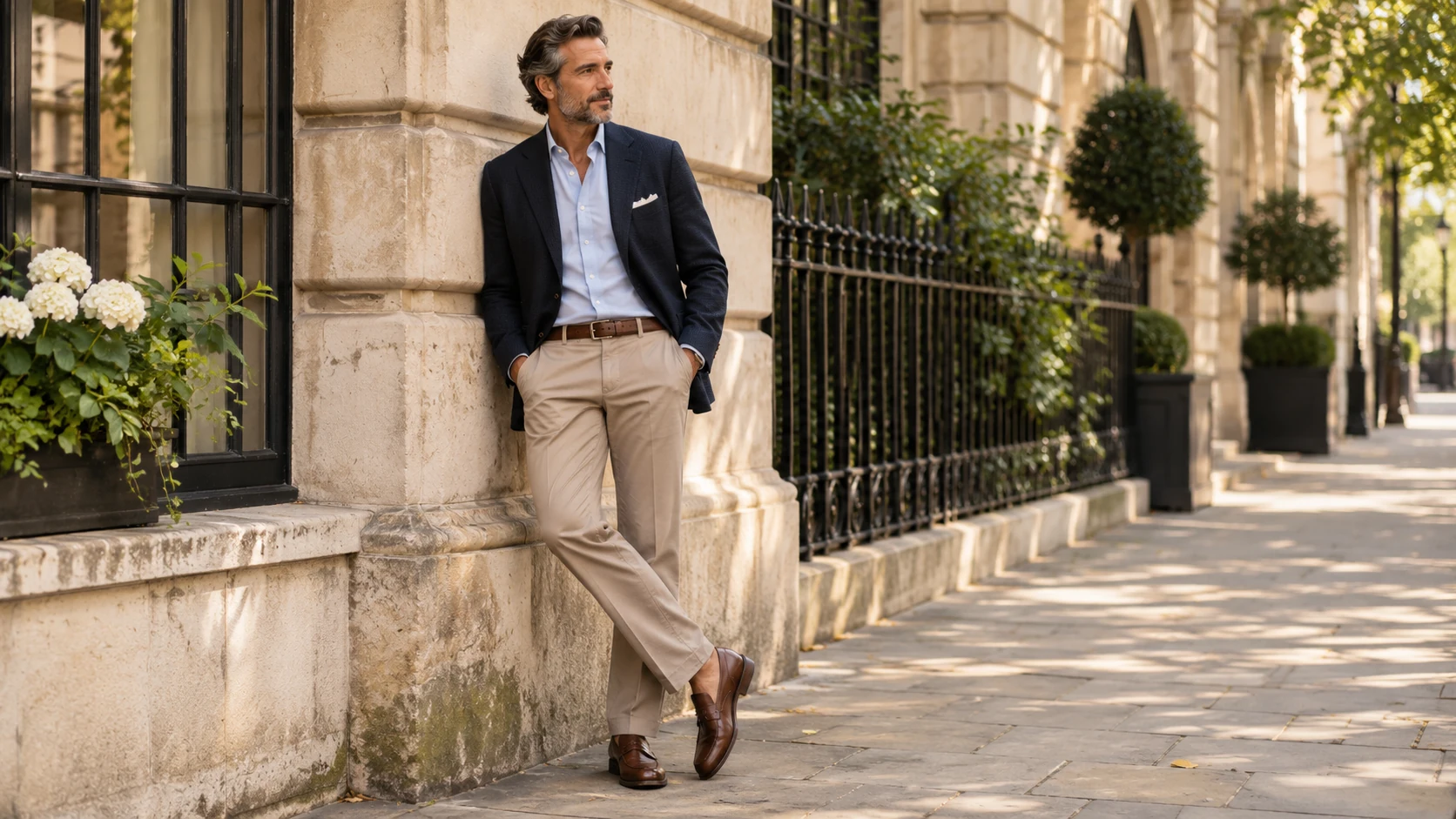
Smart casual causes so much confusion because it is often described as though it were a fixed uniform. It is not. A relaxed office lunch, a birthday dinner and a country-house invitation may all carry the same instruction, yet they do not ask for the same clothes. The useful question is not whether a particular item is technically smart or casual. It is whether you look as if you understood where you were going and made a reasonable effort for the people you will meet.
Begin with the occasion
An invitation tells you more than a dress-code label. Consider the location, the time of day and the people who have arranged it. A restaurant with table service asks for a different degree of care from an afternoon barbecue, even when neither calls for a suit. Where you genuinely do not know, ask the host. A simple enquiry is preferable to arriving uncomfortable or making the occasion about your clothes.
Think of the setting as the starting point. An indoor evening usually allows darker colours and smarter shoes. An outdoor daytime gathering may call for lighter clothing and something you can walk in. Aim to look at ease, not overdressed for the sake of it.
Build around one dependable jacket
An unlined navy or brown jacket is useful precisely because it can be worn without matching trousers. It adds a little formality to an open-collar shirt, a fine jumper or a plain polo. Choose a jacket that sits comfortably across the shoulders and allows you to move your arms. If the sleeves cover most of your hands or the collar rides away from the neck, a good fit matters more than its label.
Not every occasion needs a jacket. A well-fitting overshirt or neat knitwear can make sense at a relaxed gathering. The aim is not to impose tailoring where it does not belong, but to have an option when the evening calls for an extra degree of care.
Let the shirt do its job
An Oxford-cloth button-down is one of the more useful shirts in a man’s wardrobe. It is comfortable enough for daytime and can look entirely appropriate beneath a jacket. A plain white or pale-blue shirt offers more flexibility than a conspicuous print. Wash, iron and replace it when necessary. A badly kept shirt undermines otherwise sensible clothing.
A polo can work in warm weather, provided its collar lies properly and the fabric is not stretched out. A T-shirt belongs in some smart-casual settings too, but the more uncertain the occasion, the more reliable a collared shirt becomes.
Choose trousers that look intentional
Dark, plain denim can sometimes pass, particularly in relaxed workplaces and informal restaurants. That does not make heavily faded or torn jeans a safe choice everywhere. Well-fitting chinos or wool trousers are easier to adapt. They should allow a comfortable stride and sit cleanly at the shoe rather than collecting in a heap around the ankle.
Check the whole outfit before leaving. Dark trousers with a dark jacket may look accidental if the shades are almost, but not quite, the same. Contrast is often simpler, with navy above and grey or stone below, or a brown jacket with darker trousers.
Finish with footwear that suits the day
Suede loafers, plain leather shoes or simple, clean trainers can all work, depending on the occasion. The condition matters. Scruffy footwear is rarely rescued by an expensive jacket. If you will be standing outside or walking across wet ground, practicality must take precedence over a photograph-worthy choice.
Keep the accessories modest. A belt that works with the trousers, a watch if you wear one and a coat suited to the weather are plenty. You should be ready for the event, not preoccupied with whether every detail is being admired.
Make a decision and stop adjusting
Lay everything out with a little time to spare. Check the fit in ordinary daylight and ask whether the clothes work together. If they do, get dressed and leave. Smart casual is meant to take the pressure out of formal dressing, not create a new set of impossible rules.
The strongest impression is made after you arrive, when you greet people properly, listen and join in. A sensible wardrobe makes that easier by allowing you to forget about what you are wearing.
Dress for the people and the place.
When in doubt, a clean shirt, dependable trousers, comfortable shoes and a suitable jacket will serve you better than trying to interpret every new fashion rule.