Good trousers are the foundation of more outfits than most men realise.
A man can own a fine jacket and a good collection of shirts yet still struggle to dress for dinner because none of his trousers quite works. Some are too casual, others belong only with a matching suit, and a few simply no longer fit. Buying the right trousers is less a matter of chasing a new cut than understanding what they need to do.
The most useful pairs move comfortably between situations. They suit a normal working day, a restaurant and an occasion that asks for more care than jeans without calling for a suit. They also fit properly while standing, sitting and walking.
Know the difference between the main options
Chinos are made in a cotton twill and can be worn with casual shirts, knitwear and many jackets. Stone, navy, olive and brown are familiar choices. Their strength lies in adaptability, though an overly slim or worn pair may not work for smarter occasions.
Wool trousers can be useful well beyond formal business dress. A plain grey pair with a neat shirt and suitable shoes is comfortable at many evening gatherings. Depending on the fabric and cut, wool trousers can be worn with an informal jacket or fine jumper without looking as if the other half of a suit has gone missing.
Denim has its place too. Dark jeans without heavy fading may work in some relaxed settings, but they are not a substitute for trousers when the invitation asks for something smarter. Think of denim as a useful alternative, not a universal answer.
Fit starts at the waist
Try trousers without relying on a tightly fastened belt to make them stay up. They should sit comfortably around the waist and allow you to sit down without pressing hard against the stomach. A waistband that slips constantly or pinches after a meal is a warning sign.
Check the rise, which is the distance between the waistband and the seam beneath it. A rise that is too low may pull when you sit or bend. One that is too high for the design may feel awkward. The correct choice depends on the cut and how you prefer to wear your clothes. There is no virtue in forcing yourself into an uncomfortable fit.
Look at the seat and thighs next. You should be able to walk up stairs and take an ordinary stride. If the pockets gape or the fabric strains when seated, try a different cut rather than assuming the material will quickly relax.
Get the length right
The hem of a trouser changes how the whole outfit looks. Too much fabric gathering around the shoes can make an otherwise sensible pair seem neglected. Too little may expose more sock than you intended. Choose the length with the shoes you plan to wear most often.
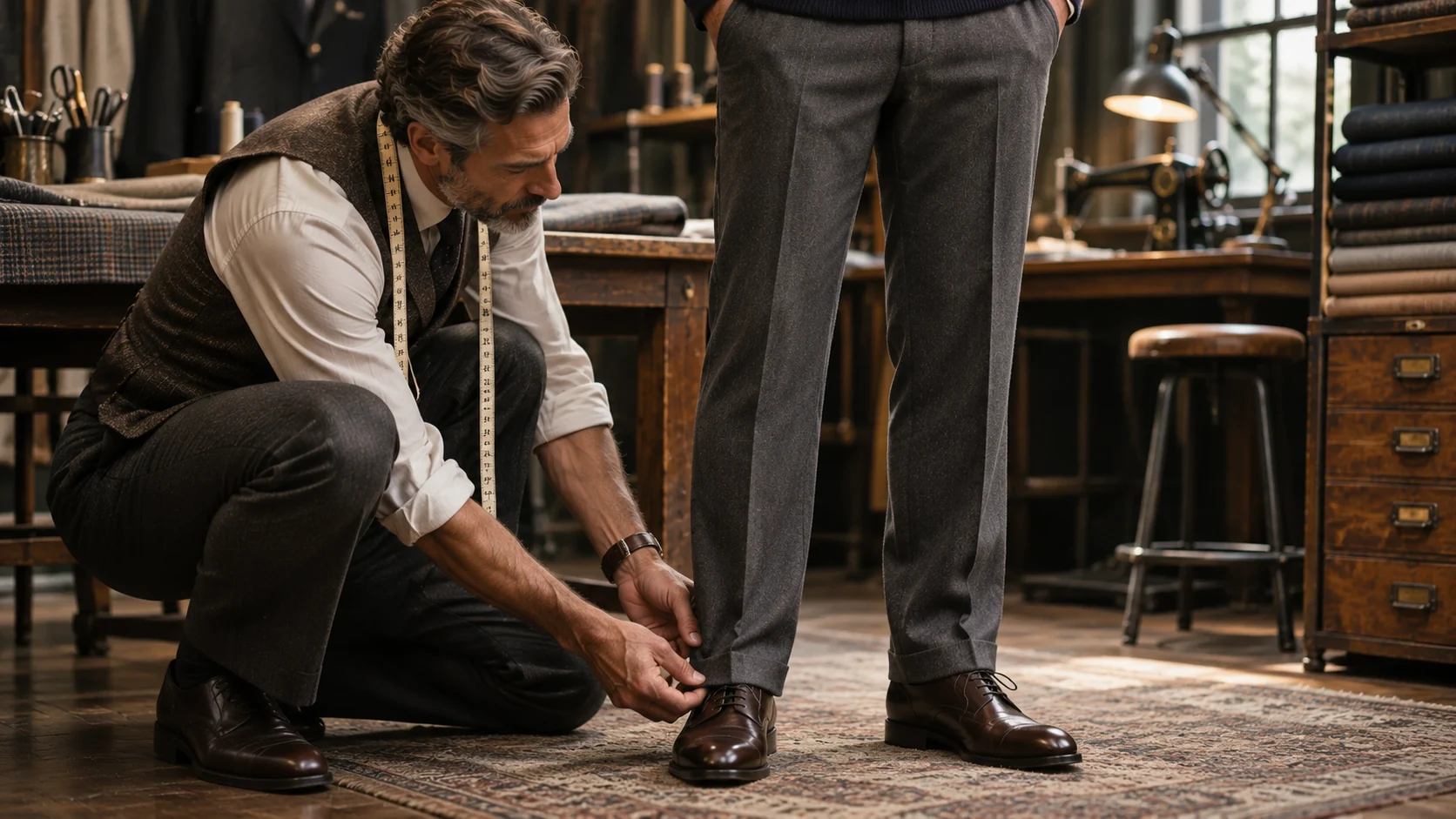
Some trousers are cut to rest lightly on the shoe. Others finish a little higher. Both can work. What matters is that the result looks considered and allows the fabric to hang naturally. Tailors can often adjust the hem economically, so do not dismiss an otherwise good pair solely because it needs shortening.
Try the trousers with your usual footwear. The length that looks right with a low loafer may behave differently with a boot. If the pair will serve several occasions, choose a versatile finish rather than an extreme one.
Build combinations from what you own
Navy chinos work with a white Oxford shirt, a plain knit and many brown shoes. Grey wool trousers suit pale shirts and darker jackets. Stone trousers can be useful in warmer months with navy, olive or brown above. These are starting points rather than strict rules.
Avoid buying a colour simply because it looks appealing on a model if it clashes with everything you own. Take a photograph of the shirt and shoes you intend to wear with it, or bring them along when shopping. A pair of trousers that works with three existing outfits is more useful than one that requires three further purchases.
The belt and shoes should also make sense together, though they need not be identical in colour. Keep the overall appearance straightforward. A sensible combination often looks better than one where every item is competing for notice.
Understand fabric and care
Cotton chinos are generally straightforward to maintain, but read the label for temperature and drying advice. Wool trousers may require more careful cleaning and pressing. Some travel-oriented fabrics resist creasing, though their comfort and appearance vary from one garment to another.
After wearing, hang trousers properly so the fabric can settle. Empty the pockets and brush off dirt before putting them away. If the knees have stretched or the waistband needs attention, consider whether a repair or alteration is worthwhile. Routine care is a more economical habit than repeatedly replacing otherwise sound clothing.
Do not neglect the small details. A missing button, loose hook or damaged hem is easier to fix before it fails at an inconvenient moment.
Keep the collection sensible
A dependable pair of chinos and a good pair of wool trousers can cover an enormous range of occasions. Additional pairs should earn their place by adding a genuinely useful colour, weight or level of formality. If you already wear the same two pairs every week, that is useful information about what you should buy next.
Start with fit, choose for the life you lead and look after what you own. Good trousers make the rest of dressing feel much less complicated.
Good trousers should make getting dressed easier.
Start with fit at the waist and seat, then have the length adjusted for the shoes you actually wear. A dependable pair of trousers should spend more time in use than on the hanger.